

This year the Slovenian Science Foundation celebrates its 30th anniversary. In addition to several events that have already taken place and will take place during the celebration year, the Slovenian Science Foundation, on the initiative of the Ministry of Foreign and European Affairs of the Republic of Slovenia, high-tech companies, centres of excellence and research institutes, organised the first Slovenian-Indian Day of Science and Innovation on 6 February 2024, with the aim of bringing Indian science closer to the Slovenian and European public and thus introducing the guests to the brilliant scientists of Slovenia.
The rich history of this type of event has seen a number of novelties this year, including science diplomacy, which is by no means a new discipline, but which has gained tremendous importance precisely because of the nature of the most pressing global challenges humanity is facing today, the solutions to which lie primarily in scientific discoveries and innovations. Each country can go about addressing similar crises in their own way, and yet, when it comes to dealing with similar problems on an international scale, what tends to happen is that a country’s foreign policy requires a major refinement of its tools, or a whole new set of tools, to deal with a world in which the complexity of science and technology is increasing so massively – or, to use the words of the famous philanthropist and businessman Bill Gates, the current pace of scientific and technological discovery and progress is as great as ever and will only increase, sharply, in the coming years.
Yet it is not just scientific discoveries per se that are useful; what is even more evident today are the scientific values of transparency, universality, impartiality and also rationality, which create a non-ideological environment in their own right that fosters the free exchange of ideas, which in turn builds trust and facilitates the resolution of problems that countries cannot solve alone. And the sheer soft power of science enables cooperation and the easing of tensions, which feeds innovation, creates effective networks and facilitates peace.
To build a more equitable world order, the current multilateralism that has underpinned international relations since the Second World War, and which is a direct reflection of the political forces of the second half of the 20th century, needs to be reformed in ways that meet the expectations of the Global South. And this most certainly includes ensuring fair representation, redressing historical imbalances and establishing inclusive decision-making processes. Only in this way can the international community create a system that promotes sustainable development, reduces inequalities and ensures that the voices of all countries are heard to the fullest extent possible.
It is a well-known fact that one of the greatest advocates of reforming multilateralism is the Indian Prime Minister, Narendra Modi, who, already back in 2020, on the occasion of the United Nations’ Jubilee in 2020, declared:
“We cannot fight today’s challenges with outdated structures. Without comprehensive reforms, the UN faces a crisis of confidence. For today’s inter-connected world, we need a reformed multilateralism: that reflects today’s realities, gives voice to all stakeholders, addresses contemporary challenges, and focuses on human welfare.”
However, India is certainly one of the main promoters of this process, especially after its successful G20 presidency last year (2022-2023). The approach it advocates emphasises intensifying South-South interactions, ensuring the transformation of interdependence into empowerment, unleashing the development power of the Global South, where improved access to finance and technology is key, and democratising the digital transformation that will be a key driver of its economic and governance transition.

At last year’s G20 summit in India, India brought the hopes and priorities of the Global South even more to the fore. Its desire to globally reshape the financial architecture and increase inclusiveness also led to the inclusion of the African Union in the G20 membership. Disrupting the status quo is high on India’s agenda, and it makes no secret of its desire to empower the Global South through Southern diplomacy, which is being advocated as such by India itself. In the process, it aims to achieve collective success, mutual learning and shared aspirations. The progress framework is based on the domestic priorities decided by the partner countries with which India shares its development journey. This development should be primarily human-centric, multidimensional and multisectoral.
The challenges posed by difficulties in areas such as the economy, health, food, energy and security, and in particular by major global crises such as the recent pandemic and the rise of conflicts such as terrorism and radicalisation in certain areas, require cooperation and joint efforts by all countries of the Global South. This can only be ensured through fair and inclusive global governance and effective global financial institutions. Moreover, the Global South is deeply affected by major uncertainties, with a sharp increase in political conflicts and thus regional instability between 2023 and 2024.
This kind of cooperation with other developing countries is hardly something new for a country like India. The beginnings of extending Indian resources and expertise to the Global South date back to the 1950s. India has provided assistance to various multilateral institutions, both financial and regional, and has undertaken and managed several renovation and restoration projects, initially mainly in its neighbouring countries.

The growth of development partnerships has been observed in India’s cooperation with its neighbours since the inception of the independent state. In 1944, India was already cooperating with 47 countries, mainly for the purpose of development support, and is now cooperating with nearly 190 countries, mostly in the regions of the Global South. This enhanced cooperation has seen an increased role for the private sector, mainly in providing the financial and technological part of the cooperation, while other organisations, which are not private by nature, have taken the lead in innovation and development and in providing highly skilled human resources. These organisations are now linked to different sectors of the Sustainable Development Goals (SDGs), such as renewable energy, water, health and education.
This cooperation and development partnership has yielded successes not only in India, but also elsewhere in the world, and has greatly enhanced the role of India’s soft power and cultural values on the global diplomatic stage. The alternatives offered by India in the field of development cooperation are helping to reshape partnerships in the Global South as well as cooperation with the countries of the North.
In any case, the first indicator of the success of the Global South on a global scale is its economic success, and so the story of the Global South in recent decades must also be viewed through the lens of the market. India, Brazil and Indonesia are slowly but steadily on their way to becoming world-class economies in the near future. These economies are emerging from near invisibility and growing into major global players with considerable influence on the international economic system. The Global South has achieved major measurable successes on a global scale, catching up with its northern neighbours in terms of GDP growth. The export profile of the Global South is reliably shifting towards technology-intensive goods. Over the past two decades, exports have become fully aligned with the technology-intensive exports of the rest of the world. During this period, exports of such products in the Global South have almost tripled. However, as already mentioned, the only right course of action is for the countries of the Global South to improve their cooperation with each other in order to overcome the obstacles that currently hinder the region’s success in global trade.

Samir Saran, President of the Observer Research Foundation (ORF) and curator of the Raisina Dialogue, India’s largest geopolitical and geo-economic forum, pointed out this year that we are witnessing the world rediscovering India and India rediscovering the world. India is a country with a new set of priorities, in search of a better life, and with its new sustainable orientation, seeking new partnerships around the world. It wants to share best practices with others and better connect with the world. It is increasingly becoming a global producer of raw materials, and its digital solutions are spreading to almost every country in the world, which is why, ultimately, I would like to warmly invite you to the Second Slovenian-Indian Day of Science and Innovation, scheduled for autumn 2024. Unlike the first one, it will have a stronger focus on the economy. It will offer many opportunities to strengthen cooperation between companies and institutions in Slovenia and those in India, particularly in the field of technology and science, where India has already made great strides.
Andraž Ivšek
Ljubljana, 18. 8. 2024
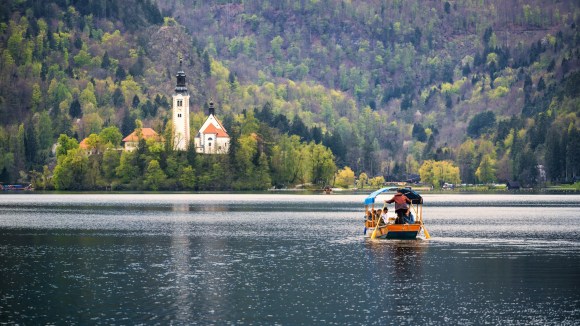
The article was presented on The Bled Strategic Forum (BSF). Forum is an intergovernmental project of the Republic of Slovenia, organised by the Ministry of Foreign and European Affairs and the Centre for European Future and is the leading international conference in Central and South-Eastern Europe, bringing together participants from diverse fields and backgrounds to exchange views and generate ideas.
 In Scientia Veritas